
Understanding Canadian email consent laws for marketers
But to make the most out of this channel, it is essential to understand and comply with email consent laws.
August 27, 2026
By Cyberimpact
Email marketing is arguably one of the most effective digital marketing channels out there. It has endless possibilities, several great platforms on the market, and a great ROI. In Canada, the key legislation marketers must be aware of is Canada’s Anti-Spam Legislation (CASL). These rules aim to protect consumers and promote trust between them and those using email campaigns to promote their businesses.
By complying with them, marketers can remain legally safe, build a strong email marketing foundation and establish customer trust. Here’s all you need to know about these email regulations and how you can ensure you’re on the right path.
This is the first article in a series where we’ll be sharing the essentials all marketers need to know to succeed using email.
What is Canada’s Anti-Spam Legislation (CASL)?
The CASL was created in 2014 to reduce spam and protect Canadians from unwanted or malicious emails. It applies to all commercial emails sent within, from, or to Canada, including emails, text messages, and some social media communications.
To comply, marketers must ensure that they have consent from recipients before sending any promotional messages. The consent can be either express or implied.
Other than that, if your business is located or operated in Quebec, or if you have contacts from that province, you must also be aware of Quebec’s Law 25. Its goal is to enhance the protection of the personal information of Quebec citizens by regulating the collection, use, disclosure, and retention of said information by private businesses and public organizations.
The importance of compliance with email consent laws
Compliance with the CASL is not just a legal requirement: it’s an opportunity for marketers to demonstrate their commitment to safety and establish trust. By obtaining proper consent before sending marketing emails or other communications, businesses show respect for their customers’ privacy, thus laying the foundation for a more trusting relationship.
Plus, the process of acquiring express consent is simple. You can use a simple checkbox on a sign-up form, send a consent campaign or use consent blocks on your email to ensure your contacts’ consent is up-to-date and valid.
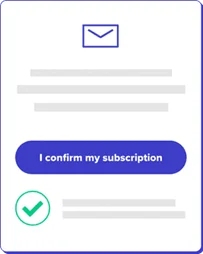
Failure to comply with the CASL and other local anti-spam regulations can result in hefty fines for your business or client, a decrease in email deliverability, damage to brand reputation, and loss of overall customer trust.
Types of Consent Under CASL (Express vs. Implied)
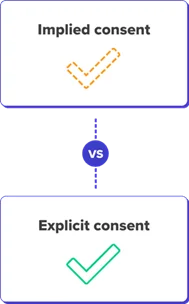
CASL recognizes two main types of consent: express consent and implied consent. Marketers must be aware of the differences between them and ensure they have the appropriate consent before sending any marketing communications. Keep in mind that depending on the type of consent you have from your subscribers, there might be an expiration date to it.
Implied consent is when someone agrees to something without specifically saying so. In email marketing, this means a company might believe someone agreed to receive promotional emails without explicitly saying yes.
Businesses often use it when they already have a relationship with a customer or potential customer, such as when someone has purchased something or asked for information. It’s imperative to understand the rules and limitations of implied consent to avoid breaking data privacy laws.
There are undeniable benefits of working with this type of consent: It’s easier to get and some contacts might be potential customers, thus expanding your CRM with potential leads. However, contacts with implied consent may be less engaged with communications, leading to lower open and click-through rates. Also, because there was not an intentional sign-up for promotional emails, those same contacts may unsubscribe more frequently, possibly reducing the size and quality of our contact list.
Express consent is when a recipient explicitly agrees to receive commercial electronic messages, either by opting in through a form or checking a box. It must be unambiguously done.
Best practices to get express consent
Having the right consent under CASL regulations is one way to maximize the quality of your list. Here’s some easy steps you can do to stay compliant:
- Use simple and unambiguous language: The writing used to request consent should be simple, understandable, and leave no margin of doubt that the user is agreeing to receive marketing emails from your business.
- Send a consent campaign: Send a consent campaign so your contacts can update or change their consent info. You can use one of several Cyberimpact consent templates for this.
- Easy withdrawal of consent: Ensure your contacts can withdraw consent as easily as they gave it by including an unsubscribe link in each email or a consent block on your email campaign.
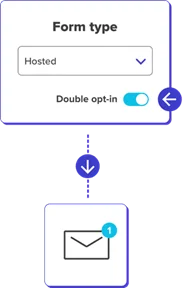
- Active opt-in or double opt-in: Use a checkbox as an active opt-in procedure or double opt-in to get explicit consent from your subscribers. Please note that pre-checked or pre-selected opt-ins are not considered express consent.
By complying with the required regulations, your contact list can become healthier and more engaged. With a healthy list, you are also increasing your sender’s reputation — a key element for all email marketers to stay clear from the junk folder.
In the next article in this series, we will explore how you can increase your email deliverability and avoid being tagged as spam.




Ready to Get Involved?
Join a local hub, attend an event, or just stay in the loop. There's a place for every marketer in this community.